A Visual Essay
Anatomy of a longtail
One swivelling shaft, one repurposed car engine, one hand-built wooden hull. How Thailand's most recognisable boat actually works - and why nothing has replaced it.
Chapter 01
The hull
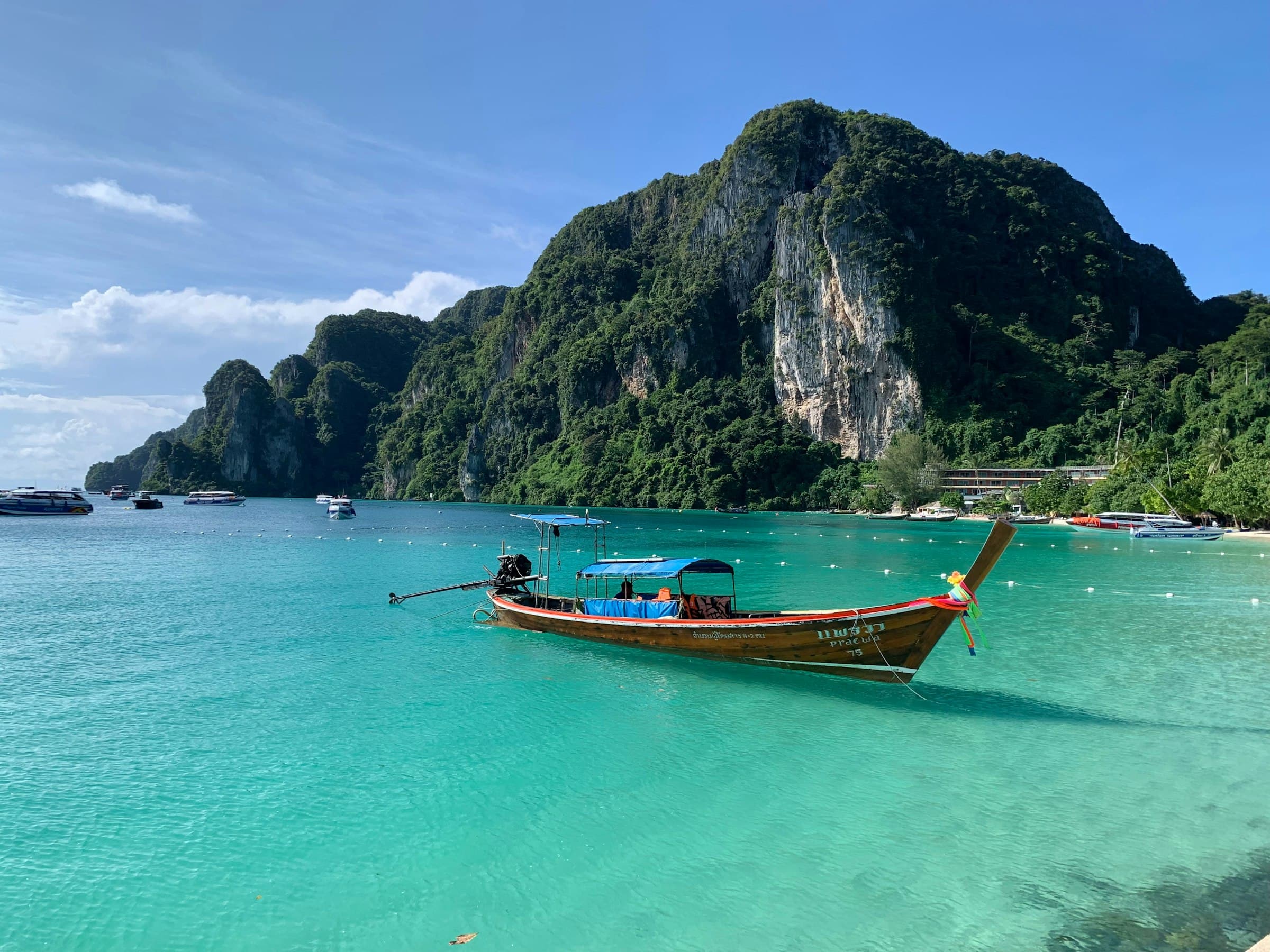
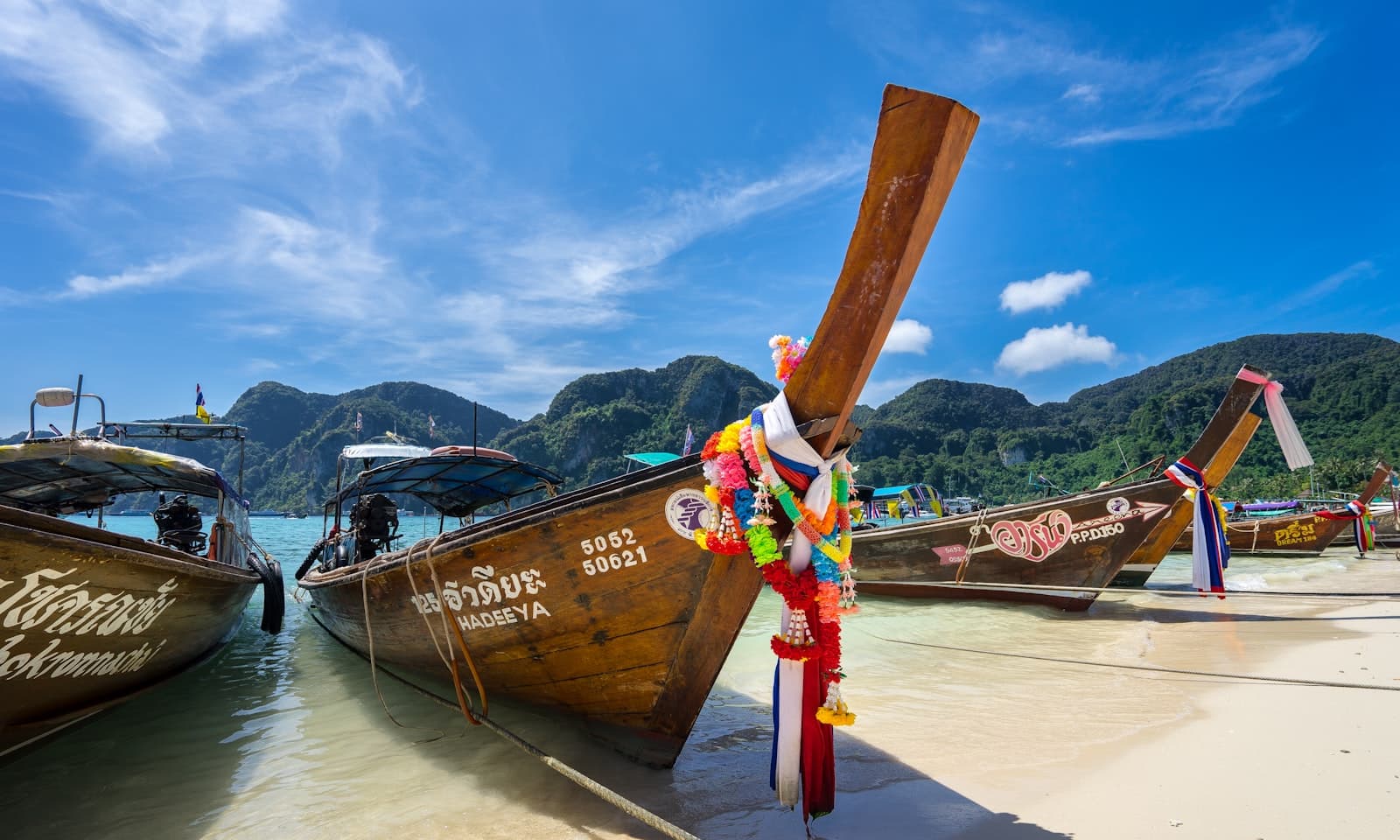
Rua hang yao (เรือหางยาว) means, literally, long-tail boat. The hull came first: a slim plank-on-frame wooden boat, typically 8 to 12 metres, built by hand in family workshops. The design predates the engine - what made it the longtail was a modification credited to Sanong Thitibura, a royal helmsman in Sing Buri province, who in the 1930s mounted an engine on a rowing boat and extended the propeller shaft far out behind it.
That improvisation never stopped. Nearly a century later the working tourist fleet across southern Thailand is still overwhelmingly wooden, still hand-built, and still recognisably the same boat.
Chapter 02
The engine
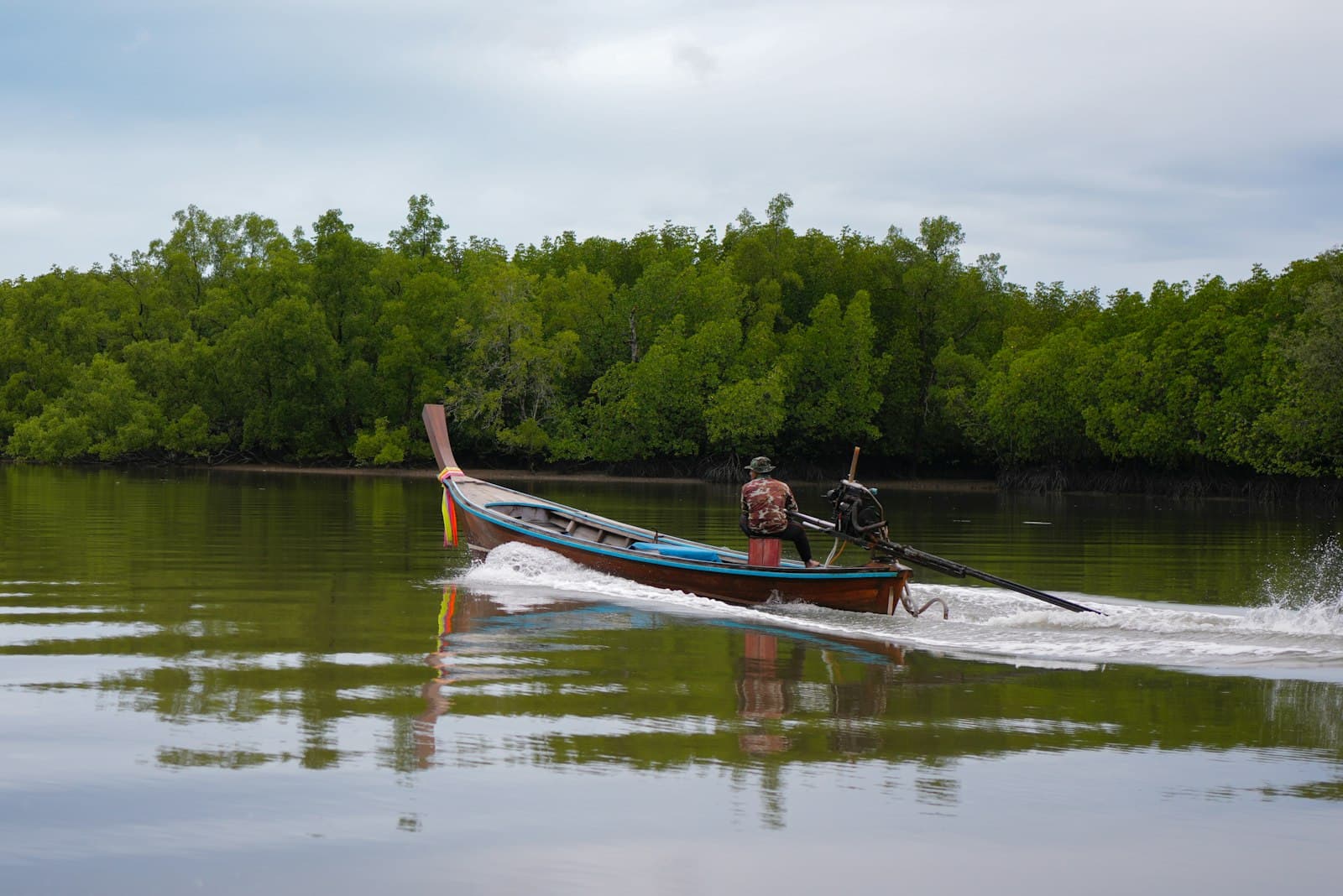
There is no marine engine. A longtail runs a repurposed automotive engine, bolted to a turret-pole at the stern. A standard tour boat makes roughly 120 horsepower - car power, not ship power. There is no gearbox either: the propeller connects directly to the driveshaft. When the engine turns, the propeller turns.
It is loud, it is exposed, and it is the entire drivetrain in one visible piece. Watch a captain at the stern and you are watching the whole machine work.
Chapter 03
The tail
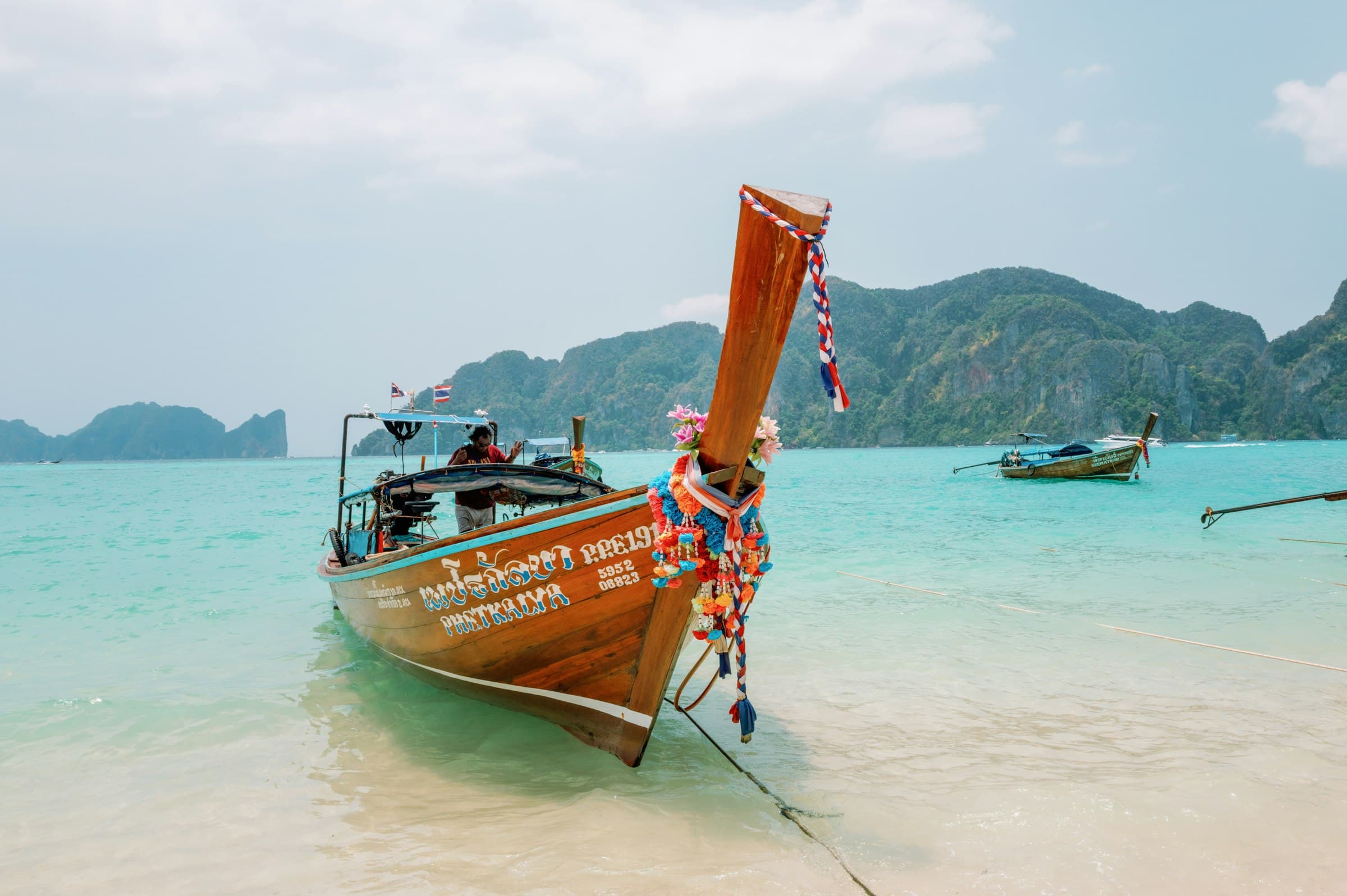
The tail is the propeller shaft itself, and it is the whole trick. The engine sits on a swivel that turns through 180 degrees, so the captain steers by pointing the thrust - there is no rudder. And because the shaft pivots vertically too, it lifts clear of the water entirely.
That lift is why the longtail still owns this coast. The captain raises the shaft over coral heads and sandbars and noses the boat onto the beach in ankle-deep water. It is how longtails enter the collapsed limestone lagoons (hongs) around Krabi and Phang Nga, and land directly on road-less beaches like Railay. A deeper-hulled speedboat anchors off and shuttles you in; the longtail just arrives.
Chapter 04
The economics
A shared seat on a longtail island day tour runs about $22-37 per person on the booking platforms - and the speedboat version of the same tour overlaps at roughly $27-36, so the wooden boat is not the budget compromise people assume. The real gap appears when you charter the whole boat: 2,500-3,500 THB for a half day or 4,500-6,500 THB for a full day, for a boat that seats about eight.
At the small end, the Ao Nang to Railay crossing costs 100 THB per person for 10-15 minutes across the water - one of the cheapest iconic boat rides anywhere. Run the numbers for your own trip with our trip cost calculator.
Chapter 05
The fast ones
The same architecture has a racing class. Around Bangkok, most famously on the Cobra Canal, builders drop Isuzu 4JJ1 turbo diesel truck engines making 400-500 horsepower onto wooden hulls between 6 and 28 feet long. The result exceeds 100 mph on flat canal water. Races are informal and unscheduled - word of mouth, not tickets.
One operator, Thai Longtail Experience, sells a bookable version: a 45-minute ride in a fully built 500 hp race boat out of Samut Songkhram, $195 per person as a day tour from Bangkok. We cover the whole scene in our turbo longtail guide.
Ready to ride the slow kind? Start with the Krabi 4-island tour or take the 100 THB crossing to Railay, or let the which-boat quiz decide for you.